Stargazing Tips for Dark Sky National Parks
Plan ahead & check conditions.
No two nights are the same in the national parks, so a little planning goes a long way. Before you head out, check cloud cover, weather, and moon phases. The National Park Clear Sky Chart like this one in Canyonlands National Park is your go-to for up-to-date night sky conditions, and can help you track sunrise, sunset, and moon phases.
Chase the darkest skies.
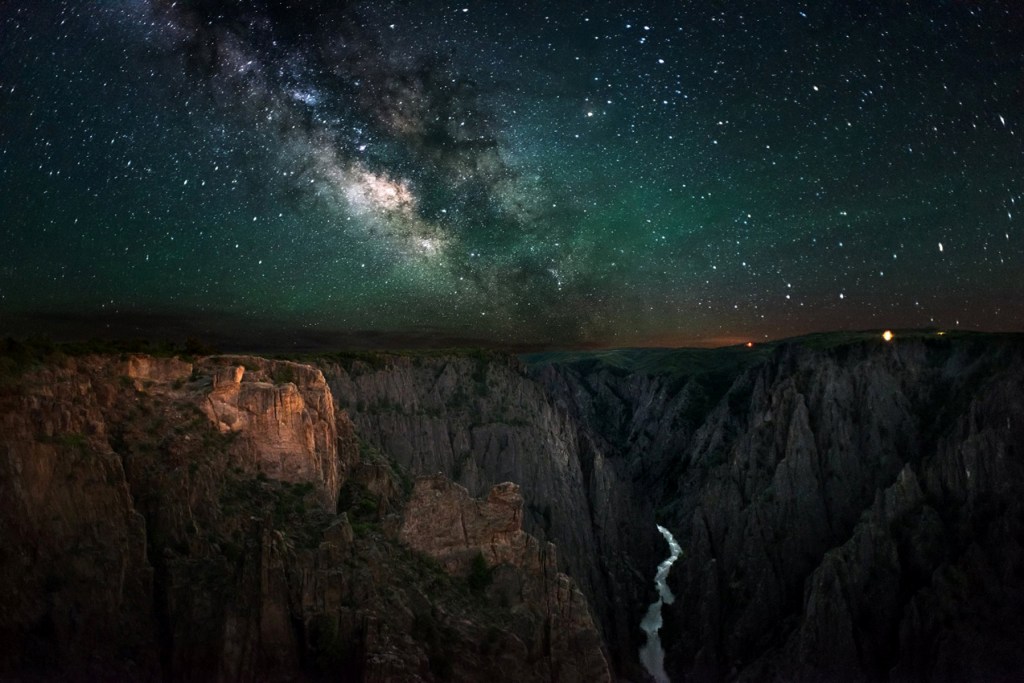
The best stargazing happens during a new moon or when the moon has already set. Even a sliver of moonlight can wash out fainter stars—and the Milky Way. Time your visit right and let the darkness work its magic.
Pick the perfect spot.
Location matters! Choose a high viewpoint or a wide, open area far from roads, buildings, and artificial lights. The darker and more open the view, the more stars you’ll see.
Slow down and let your eyes adjust.
Give yourself 20–30 minutes in the dark. Step away from bright lights and be patient—your eyes will reward you as more and more stars come into view.
Go red, not white.
Bright white lights from phones, flashlights, or car headlights can ruin night vision. Use a red light instead—it’s much gentler on your eyes. Many headlamps have a red-light setting, or you can DIY one by covering a light with red cellophane.
Bring a star guide.
A star chart or planisphere makes it easier to spot constellations and trace the Milky Way across the sky. Visitor centers often have star charts and extra stargazing tips—don’t miss them!
Now you’re ready—step into the darkness, look up, and let the Dark Sky National Parks of the U.S.A. light up your night!
 Dark Sky National Parks of the U.S.A.
Leave a comment